
Safety Corner

Bucket Brief: Winter 2026
February, 2025
Starting the year, focused, prepared and safe! A new year brings fresh opportunities and new risks. Quarter 1 often brings harsh winter conditions, post-holiday distractions, and demanding workloads. This is the time to reset expectations, refocus on fundamentals, and recommit to doing the job safely every time. The habits we reinforce now will carry us through the year.
Click below to read NEPPA Safety Committee’s first ever “Bucket Brief”, which includes key reminders and resources for crew safety and accident reports.

Reducing Risk Through Situational Awareness
January, 2025
Whether at work or at home. Reducing risk through situational awareness involves actively recognizing potential hazards and making informed decisions to mitigate them. This safety corner outlines how to understand and implement situational awareness effectively. Situational awareness is the ability to perceive and understand the environment around you, anticipate potential risks, and make proactive decisions to ensure safety.

CONFLICT DE-ESCALATION
December, 2025
Conflict can arise in any workplace due to misunderstandings, stress, or personal differences. De-escalation techniques help prevent conflicts from escalating into violence or unsafe situations. This safety corner will focus on strategies to handle conflicts calmly and professionally. De-escalation matters because it reduces the risk of physical or verbal violence, helps maintain a positive and safe work environment, enhances communication and teamwork, and promotes professional conflict resolution.

Two Types of Workplace Stress
November, 2025
Instead of thinking of stress as the traditional two types of stress, categorize it as unnecessary or motivating. How much of the stress you are dealing with at work is superfluous? How can it be eliminated? Are you a source of unnecessary stress for someone else at work? Eliminate unnecessary stress and embrace motivating stress to become a more efficient and safer worker.
PAST SAFETY CORNERS
See below an archive of our past Safety Corner Articles sorted by date.
2026
2025
January 2025 – Refocus on Safety After Time Off
February 2025 – Winter Walking Safety
March 2025 – Driving Awareness
April 2025 – Not a Big Deal, Until it is
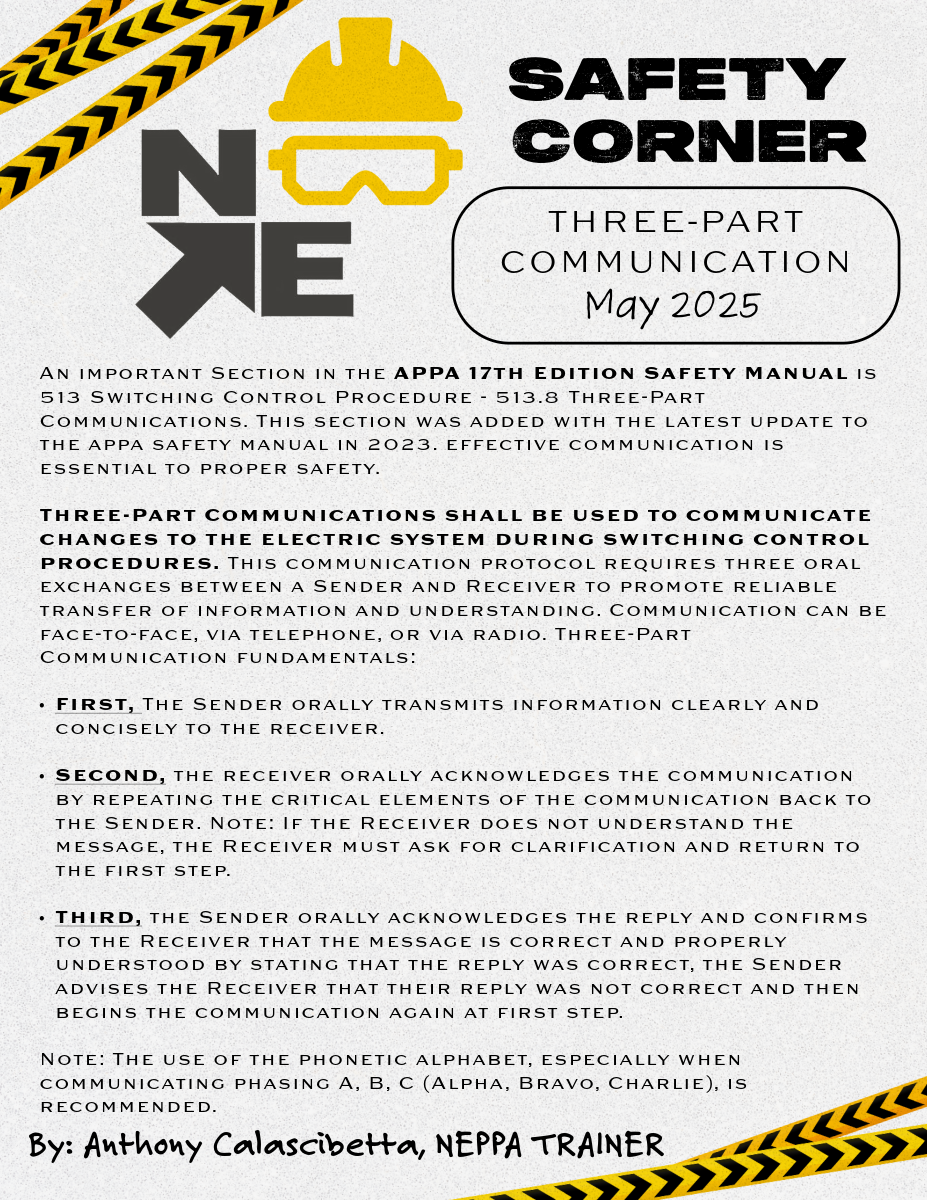
May 2025 – Three-Part Communication
June 2025 – Hydration and Heat Awareness
July 2025 – A Mirror: Your Most Important PPE
August 2025 – Fatigue & Stress Management
September 2025 – S.O.R.T for a Safer Work Environment
October 2025 – Hierarchy of Hazard Controls
November 2025 – Two Types of Workplace Stress
December 2025 – Conflict De-Escalation
2024
January 2024 – Leaving Yourself an Out
February 2024- Determining PCBs Status
March 2024- Load Securement
April 2024- Stretch and Flex Awareness
May 2024- Horseplay in the Workplace
June 2024 – 100 Days of Summer
July 2024 – Be TICK Aware
August 2024 – What Happens During an OSHA Inspection?
September 2024 – Setting Up the Work Zone
October 2024 – Thunder and Lightning Storm Awareness
November 2024 – The Dangers of Deep Frying a Turkey
December 2024 – Error Trap – Vacations & Holidays